

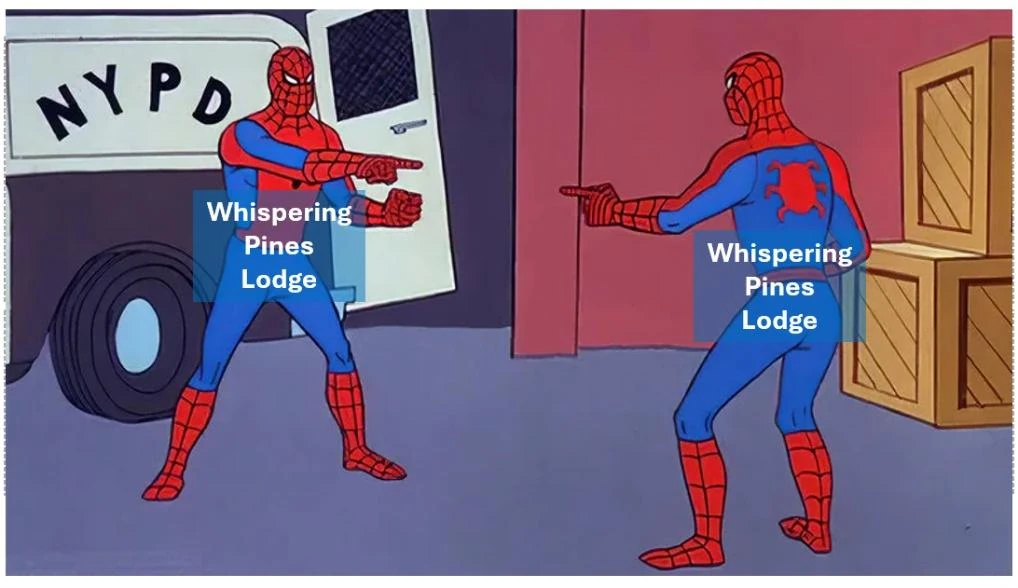
Imagine this: Your homeowners association, let’s call it Whispering Pines Lodge HOA, has been operating smoothly for years. But recently, a board member does a quick internet search and discovers a shiny new website—whisperingpineslodge.com—run by a third-party property management company or a local real estate agent renting out units in your community.
Suddenly, your residents and potential buyers are confused. Is this the official HOA website? Who is actually in charge here?
Before you brace yourselves for aggressive (and expensive) litigation, let’s break down the legal realities of HOA trademarks and look at some practical, cost-effective steps to protect your community’s identity.
The Basics: Common Law vs. Federal Trademarks
First things first. Does an HOA need a federal trademark to protect their name? The short answer is: No, but it’s complicated.
Under U.S. law, a trademark is acquired the moment a mark (like your HOA’s name or logo) is used in commerce. This grants the owner the right to prevent others from using confusingly similar marks. This is called a “common law” trademark, and it apply to marks currently used within a specific geographic area. You don’t actually need to file paperwork in Washington D.C. to get this basic protection.
Because your HOA has likely used its name since the day the Declaration was recorded, the Association almost certainly holds common law trademark rights over its full, official name in the local area.
If a court were to look at a potential infringement, they would evaluate whether the competing use causes a “likelihood of consumer confusion,” dilutes the value of your name, or implies that the HOA has authorized or endorsed the third party. This is also the HOA’s concern; members may stumble onto copies governing documents or rules on a third-party website and be led astray by outdated information.
The “Gray Area” of Generic, Common Words
Here’s where things get tricky. While you might own the rights to your full HOA name, claiming exclusive rights to individual, common words is an uphill battle.
If your community is called Whispering Pines Lodge, each of the individual words, “Whispering,” “Pines,” and “Lodge” are incredibly common. These are words used in everyday speech, so legally preventing a third party from using those individual words is very difficult. Combining multiple words is a good start at becoming more unique. Whispering Pines Lodge puts you in a legal gray area. The combination of these words is a little less common, but someone is likely using a similar name somewhere on the internet. However, as an existing HOA using the name in the area, you will have some protection. Pro tip: the more unique the name, the easier to protect.
Domains are Not Trademarks
It’s easy to assume that if you own the trademark, you should automatically own the domain. Unfortunately, the internet doesn’t work that way.
In a legal sense, a domain name is treated as a form of intangible property; it’s just a digital address. While a trademark can be used as a domain, you generally cannot stop someone else from registering a domain name that incorporates common words, as long as they aren’t using it to actively deceive consumers or sell counterfeit goods.
While the HOA could try to buy up every competing domain name, paying to acquire and maintain a bunch of dormant websites is rarely a prudent use of association funds.
Practical Remedies That Won’t Break the Bank
If an aggressive lawsuit isn’t the answer, what should an HOA do when a third party is piggybacking off their name? Here is the Miller Harrison approach:
1. Send a Letter
If online confusion is a real concern, we recommend sending a formal letter to the third-party property managers or agents. Trademark law rewards those who actively prevent others from using their mark. The letter will officially request that they modify their website to clarify they are notaffiliated with the Association. Usually, adding a simple disclaimer, providing a direct link to the official HOA site, or explicitly identifying themselves as a third-party manager is enough to solve the problem.
2. Leverage SEO Instead of Lawsuits.
If your HOA website is buried on page three of Google for the search term “Whispering Pines Lodge Utah” but pulls up first for “Whispering Pines Lodge Utah HOA”, the most practical solution is Search Engine Optimization (SEO). Investing a little time or money into improving your official site’s SEO will ensure it pops up first when owners are looking for you. It’s can often be much cheaper to outrank the competition on Google than it is to out-litigate them in court.
3. Consider Federal Registration (If It Makes Sense)
Federal trademark registration remains an option. While not strictly necessary, it provides stronger enforcement rights across the entire country and puts the public on official notice of your ownership. The process involves an application, a review period by the USPTO, and a public opposition period. Even then, it’s not a magic shield. It only protects you in specific categories of commerce and doesn’t give you a monopoly on generic words. Still, if you want to solidify your priority, it’s a tool worth considering.
The Bottom Line
When it comes to HOA name confusion, you have rights, but you also have options that don’t require draining your reserve accounts on legal fees.
If your community is dealing with digital doppelgängers, a well-drafted letter and a smart web strategy are usually your best bets. If you need help drafting that letter, evaluating your common law rights, or applying for a federal trademark, the team at Miller Harrison is here to help. Contact us today to keep your HOA’s good name exactly where it belongs—with you.